Beyond the Pill Bottle: The Top 10 Medication Management Tools for 2026
In 2026, medication management is increasingly digital, connected, and shaped by the phone, watch, portal, or caregiver workflow already surrounding the patient. This guide compares 10 tools that stand out for privacy transparency, reliability, and integration — not just reminder notifications.
Clinical Context
Medication adherence remains one of the biggest barriers in chronic disease management. WHO has long reported that adherence among patients with chronic diseases averages only about 50% in developed countries. [1] [2]
The best medication management tool is not the one with the longest feature list. It is the one that fits the patient's real routine, security expectations, and existing digital ecosystem.
Selection method: We selected these tools using official documentation, privacy and security disclosures, current platform availability, and how well each one fits real medication routines. This is an editorial review, not a sponsored ranking.
Medical disclaimer: Medication apps can support adherence but do not replace prescription labels, pharmacist counseling, or individualized medical advice from a licensed clinician.
Introduction
Why the adherence gap still matters
Medication adherence is still one of the hardest parts of chronic disease management. The problem is not only forgetting a tablet once in a while. It also includes late doses, abandoned refills, confusing instructions, fragmented records, side-effect avoidance, and routines that break down during travel or stressful life events. WHO has long reported that in developed countries, adherence among patients with chronic diseases averages only about 50%, while CDC data links poor adherence to worse outcomes, more hospitalizations, and higher healthcare spending. [1] [2]
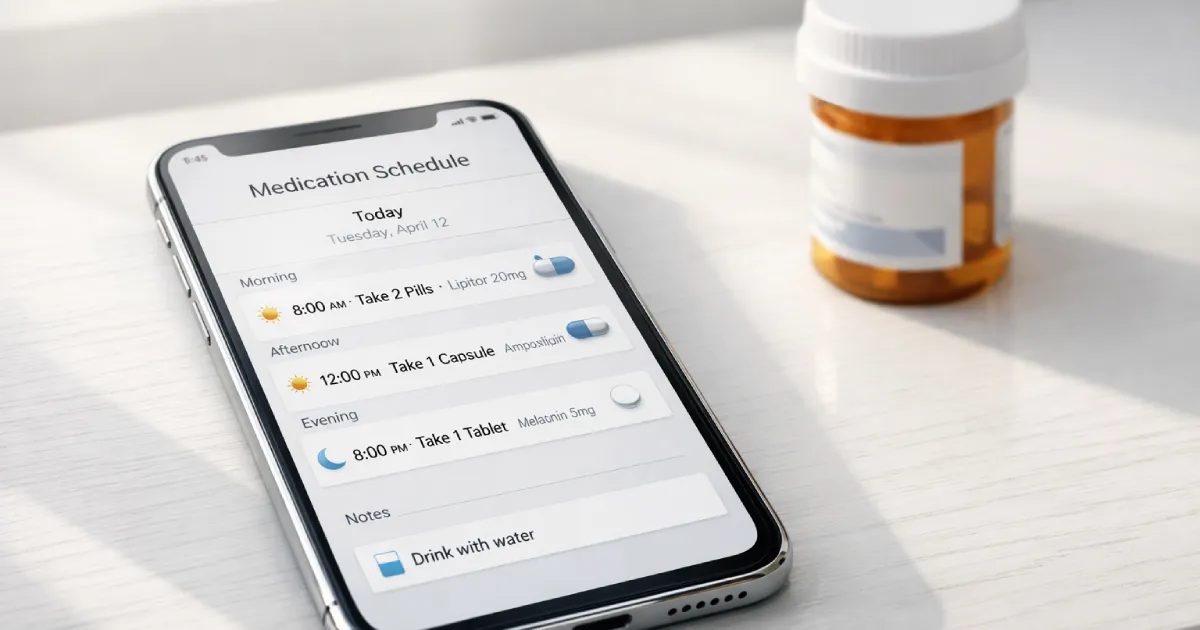
That is why medication management tools matter. A good tool does more than ring an alarm. It helps the patient answer four practical questions: What am I taking, when am I taking it, what did I already log, and who can help if I start slipping? For some people, the answer is a lightweight reminder built directly into the phone. For others, it is a caregiver-linked dispenser, a chronic-condition journal, or a provider-connected portal that reduces manual entry.
In this review, MedaDose evaluated tools across three core criteria: data privacy, ease of use, and integration capability. Privacy matters because medication data is sensitive health data. Ease of use matters because a perfect app that a patient abandons is not clinically useful. Integration matters because the strongest adherence tools increasingly work inside the patient's existing ecosystem — whether that is iPhone, Galaxy, Epic, NHS-linked workflows, or caregiver-connected hardware.
If you are managing a weekly GLP-1 schedule, do not assume a once-weekly medication is easy to remember. Weekly therapies can still be missed, especially during titration, travel, or dose changes. See our GLP-1 Titration Guide for a companion resource on semaglutide dose-escalation adherence.
The Ecosystem Giants
Native tools that are better than many patients realize
For many people, the highest-adherence solution is the one already installed on the device they use every day. Built-in tools eliminate app-switching, reduce password fatigue, and benefit from OS-level permissions that third-party apps must request separately.
Apple Health
iPhone, iPad, Apple Watch
- Apple's Medications feature lets users add scheduled or as-needed medications, log doses as Taken or Skipped, and receive medication reminders from the Health ecosystem. [3]
- It supports medication education and built-in drug interaction checks, including interaction factors such as alcohol. [5]
- Its biggest clinical advantage is low friction: patients do not need to adopt a separate brand or workflow if they already live inside the iPhone and Apple Watch ecosystem. [3] [4]
- This is the strongest "default" choice for patients who value simplicity over advanced caregiver features or heavy-duty chronic-disease journaling.
Apple publishes dedicated privacy documentation for the Health app. Health data can be encrypted on device and in iCloud, and Apple states that synced health and activity data is not readable by Apple when end-to-end encryption conditions are met. [4] [6]
Samsung Health
Android, Galaxy phones, Galaxy Watch, Galaxy Ring
- Samsung added a Medications tracker to Samsung Health so users can track medication regimens and receive useful intake information. [7]
- The 2024 update expanded functionality with pill-bottle scanning, adherence views, dosage schedule monitoring, and missed-dose tracking through a dashboard. [8]
- In the broader Samsung ecosystem, the app connects with Galaxy wearables and can also store and export health records, including medications, when supported. [11]
- In early 2026, Samsung also expanded medication-related utility in the US through pharmacy discount integration inside the Medications tracker. [7]
Samsung publishes consumer health privacy statements and says Samsung Health data is protected by Knox and account security features such as two-step verification. Feature availability can vary by device and country. [9] [10]
Native tools are often underrated because they look "too simple." In practice, a tool built into the lock screen, watch, or phone health hub often wins on adherence because it reduces setup friction and password fatigue.
Comparison Table
At-a-glance comparison
Privacy Rating is a MedaDose editorial shorthand, not a regulatory certification. High means stronger public security/privacy transparency or tighter provider-healthcare integration. Standard means acceptable baseline disclosure but less transparent or less healthcare-system embedded.
| App | Platform | Best For | Privacy |
|---|---|---|---|
| Apple Health | iPhone / iPad / Apple Watch | Built-in simplicity | High |
| Samsung Health | Android / Galaxy ecosystem | Wearable-connected tracking | High |
| Medisafe | iOS / Android | Everyday reminders and refills | Standard |
| MyTherapy | iOS / Android | Therapy plans, measurements, symptoms | High |
| Hero | Smart dispenser + app | Caregivers and polypharmacy | High |
| Dosecast | iOS / Android / Amazon | Complex schedules and travel | Standard |
| CareClinic | iOS / Android | Chronic-condition journaling | High |
| EveryDose | iOS / Android | EHR-linked medication sync | High |
| MyChart | iOS / Android / Web | Epic-connected medication management | High |
| Patient Access | iOS / Android / Web | UK repeat prescriptions | High |
Specialist Tools — Everyday Reminders
Best for everyday reminder workflows
These tools win when the primary need is a medication-first interface with structured reminders, refill tracking, or flexible scheduling that general-purpose apps do not provide.
Medisafe
iOS, Android
- Medisafe is one of the most recognizable medication reminder brands, with official positioning around reminders, appointments, measurements, and daily medication management. [12]
- The app includes refill reminder workflows, which is clinically useful because missed refills are a major but often invisible part of nonadherence. [12] [14]
- Its value is strongest for patients who do not need a provider portal or advanced chronic-disease diary, but do need a medication-first interface that feels more purpose-built than a generic task app.
- A practical fit for patients managing multiple daily medications, supplements, and refill timing rather than deeper clinical analytics.
Medisafe publishes both a standard privacy policy and a separate consumer health data policy. Users should still read how the service handles sharing, consent, and service providers before entering a full medication profile. [13] [14]
MyTherapy
iOS, Android
- MyTherapy combines medication reminders with measurements, appointment reminders, and symptom checks, making it stronger than a simple alarm-only app. [15]
- Official content highlights report sharing and the ability to invite family and friends for extra adherence support. [17]
- Especially useful for chronic-condition patients whose medication adherence cannot be separated from blood pressure, mood, pain, fatigue, symptom diaries, or appointment follow-up.
- If you want one app to behave like a medication reminder and a personal therapy log, MyTherapy is one of the stronger consumer choices in this list.
MyTherapy explicitly states that it will not hand over personal data to third parties without consent and says it keeps data processing to a minimum. [15] [16]
Dosecast
iOS, Android, Amazon
- Dosecast's standout value is scheduling flexibility: it supports reminders even without an internet connection and can adjust reminders across time zones. [22]
- Particularly useful for shift workers, frequent travelers, and patients with "every X hours" or nonstandard regimens that do not fit cleanly into breakfast-lunch-dinner logic.
- Its CloudSync option can keep data aligned across unlimited Apple and Android devices, which matters when caregivers or multiple household devices are involved. [23]
- Not the flashiest app in this roundup, but for regimen complexity, reliability usually matters more than aesthetics.
Dosecast publishes a privacy policy and supports cloud sync on its Pro edition, but patients should review how sync and cloud storage align with their comfort level before enabling multi-device medication data. [23] [24]
EveryDose
iOS, Android
- EveryDose emphasizes reminders, patient education, progress sharing, and a simplified medication schedule for patients. [29]
- What sets it apart is integration: official materials describe medication synchronization from Epic and earlier integration into Cerner-linked workflows. [31] [32]
- That means EveryDose can reduce manual entry friction in settings where adherence needs to connect to clinicians, quality metrics, or discharge workflows.
- One of the strongest examples of patient digital health moving beyond "reminder app" into operational medication adherence infrastructure.
EveryDose publishes a dedicated security page and says that when it works with partners it acts as a HIPAA covered entity and business associate. [30]
If a patient's regimen changes often after clinic visits, an integrated workflow can matter more than reminder design. Manual entry sounds minor until medicines are added, paused, or retitrated several times in one month.
Specialist Tools — Caregivers & Polypharmacy
Best for caregivers, complex households, and polypharmacy
When the real problem is not remembering a single tablet but reliably managing multiple daily medications for someone who needs oversight, the right tool operates in a different category.
Hero
Smart dispenser + connected app
- Hero is not just an app. It is an end-to-end system built around a smart pill dispenser, app, alerts, and caregiver visibility. [18]
- The dispenser officially supports up to a 90-day supply of 10 medications, which makes it one of the few tools on this list that meaningfully reduces physical pill-sorting burden. [18]
- Caregiver notifications, missed-dose alerts, low-pill alerts, and remote monitoring make it a strong fit for households managing adherence risk across distance. [20] [21]
- The best option in this list when the goal is not remembering one tablet but reliably managing multiple daily meds for someone who needs oversight.
Hero describes its service as HIPAA-compliant and publishes a dedicated privacy policy. Because this tool uses connected hardware and cloud-linked caregiver workflows, users should still read the service terms carefully before enrolling a loved one. [19] [21]
Specialist Tools — Chronic Conditions
Best for chronic-condition tracking and clinical context
For patients whose medication decisions are tightly linked to symptoms, vitals, and condition patterns, a tool that connects all that context in one place adds real clinical value.
CareClinic
iOS, Android
- CareClinic goes beyond reminders by combining medication tracking with symptoms, vitals, lifestyle factors, records, and report generation. [25] [26]
- Official materials emphasize health-data security, integration options, and controls such as biometric login and encrypted synced data. [27] [28]
- Particularly useful for patients with migraines, IBS, chronic pain, mental health treatment, hypertension, or any condition where "did I take the medication?" is only part of the story.
- One of the stronger choices when the goal is not just adherence, but pattern discovery you can bring back to a clinician.
CareClinic publicly describes HIPAA-compliant protection, encryption, biometric authentication, and strong privacy controls. [25] [27] [28]
Specialist Tools — Provider Ecosystems
Best when your provider or pharmacy is the real hub
When medication management is already woven into a clinical record, the strongest tool is often the one that connects to that record rather than duplicating it.
MyChart
iOS, Android, Web
- MyChart is powerful when medication management is inseparable from the rest of the clinical record: medication lists, instructions, messages, test results, and appointments live together. [33]
- Its record-sharing features can also be useful when patients need to show medication information to a clinician outside their usual network. [36]
- Not a traditional reminder-first app, but the best medication tool for patients whose providers already use Epic and keep medication changes updated there.
- In those settings, fewer duplicate systems can mean fewer medication mistakes.
MyChart states that it follows strict HIPAA Privacy and Security standards, offers two-factor authentication, and keeps records at the healthcare organization that provides the service. [34] [35]
Patient Access
iOS, Android, Web
- Patient Access connects users to GP services, repeat-prescription ordering, pharmacy workflows, and health records through a UK-focused care ecosystem. [37] [38]
- Medication reminders are linked to GP-prescribed medications that appear in the medical record, which is stronger than a manual reminder-only setup. [39]
- Smart Pharmacy features can show status changes as a repeat prescription moves from GP to pharmacist to collection or delivery. [40]
- For UK patients, this can be more clinically useful than a generic reminder app because it reduces the gap between prescription, reminder, and fulfilment.
Patient Access publishes a privacy notice and, as of 2026 support guidance, uses a time-based passcode requirement at sign-in. [41] [42]
Privacy & Security
Read the privacy policy before you trust the reminder
When choosing a health app, you are not only choosing a user interface. You are choosing where sensitive health data lives, how it syncs, who can see it, and what happens if your phone, account, or cloud backup is compromised. Apple and Samsung both publish healthcare-specific privacy or security materials for their native ecosystems, including encryption and account protections. MyChart explicitly references HIPAA standards. Other tools publish privacy policies, consumer health data statements, or partner-security pages that patients should read before committing to a workflow. [4] [6] [9] [10] [34]
The key questions are practical. Does the product publish a real privacy policy? Does it explain data sharing with third parties? Can you turn on two-factor authentication or biometrics? Is the app primarily a standalone consumer tool, or is it embedded in a healthcare system with stronger governance? These questions matter more than marketing phrases like "secure" or "smart."
Patients looking for HIPAA-oriented medication tracking should be especially careful with wording. Not every consumer reminder app operates in the same way as a provider portal or a partner-facing healthcare platform. Tools like MyChart, EveryDose, CareClinic, and Hero make stronger healthcare security disclosures than a basic reminder utility, but users should still confirm that the workflow matches their personal comfort level and clinical needs. [18] [27] [30] [34]
Privacy and adherence are connected. Patients are less likely to use a medication app consistently if they do not trust where the data goes. A "private enough" tool that fits daily life is often better than a feature-rich tool that feels invasive or confusing.
Decision Framework
How to choose the right tool for your situation
Use this framework to narrow down which tool fits your specific situation. The goal is to match the tool to the real problem, not to pick the most well-known name.
| If your situation is… | Start with… |
|---|---|
| iPhone user who wants zero extra apps | Apple Health (Medications feature) |
| Samsung or Android user with Galaxy wearables | Samsung Health (Medications tracker) |
| Complex schedule: shift work, hourly dosing, or frequent travel | Dosecast |
| Caregiver managing meds for an older adult or polypharmacy household | Hero (dispenser + app system) |
| Chronic condition where symptoms and meds are inseparable | CareClinic or MyTherapy |
| Care managed through an Epic health system | MyChart or EveryDose |
| UK patient with GP-linked repeat prescriptions | Patient Access |
| Want a dedicated consumer reminder app with refill tracking | Medisafe or MyTherapy |
| Priority is medication-to-EHR synchronisation without manual entry | EveryDose |
| Managing a once-weekly GLP-1 or injectable medication | Any of the above — plus see our GLP-1 Titration Guide |
This is a starting point, not a prescription. Many patients combine tools — for example, Apple Health for day-to-day logging and MyChart for provider-linked record access.
Frequently Asked Questions
Common questions about medication management tools
Conclusion
Which one is right for you?
The best medication management tool in 2026 is not the one with the most screenshots, the loudest marketing, or the most trending name. It is the one the patient actually uses consistently. That usually means the right level of complexity, the right privacy posture, and the right fit with the patient's existing ecosystem.
If you want the lightest setup possible, Apple Health and Samsung Health are stronger than many patients think. If you need a medication-first reminder app, Medisafe and MyTherapy remain strong consumer choices. If you are managing an older adult or a dense pill schedule, Hero deserves serious attention. If your medication routine is tied to symptoms, CareClinic stands out. If your care is deeply linked to provider systems, EveryDose, MyChart, or Patient Access may outperform generic reminder apps.
The most important lesson is simple: medication adherence is a behavior problem, not only a technology problem. The right technology helps by lowering friction. The wrong technology adds one more barrier.
Related MedaDose Guide
GLP-1 Titration Guide: Why Slow Dose Escalation Matters
If you are using a reminder app to support a semaglutide or tirzepatide schedule, this guide explains exactly what you are tracking and why dose timing matters.
Stay ahead of digital health for patients
Get evidence-based guides, medication adherence tools, and new MedaDose resources straight to your inbox. No spam — unsubscribe any time.
MedaDose Editorial Team — Health Researcher
This article was prepared by the MedaDose Editorial Team using official documentation from app developers, health-system portals, and privacy/security materials published by the products reviewed. It is intended to help patients and caregivers make more informed digital health decisions and to support better adherence conversations with licensed clinicians.